The role of stakeholders in the benefits package, Part 1

Benefits affect everyone in the organisation. But not every benefit has the same impact, and not every stakeholder needs to be at the table at the same time. A workation, for example, requires involvement fromIT and Security, while an unpaid leave policy primarily calls for attention fromPlanning.
In this three-part series, I'll walk you through the most important stakeholders in benefits processes:
- Part 1: HR, Management and Marketing
- Part 2: Finance & Control, Legal, IT & Technology and Facilities
- Part 3: Planning, Learning & Development, external service providers and employees / works council.
For each stakeholder, I'll explain: when to involve them, what their role looks like, and what to keep in mind when implementing new or updated benefits.
👤 HR
HR is usually theinitiatorof benefits processes. Not because they are more important than other stakeholders, but simply because the benefits package falls under their responsibility.
What HR looks like varies by organisation. In smaller companies, responsibility often lies with generalists; in larger organisations, we increasingly see specialists such asCompensation & Benefitsroles. There, HR often works with a project team that develops ideas, after which approval is granted by the HR director or CHRO.
In short: HR sets the direction, but how broad or deep that role is depends heavily on the size and structure of the team.
📣 Management
The board, the management team or line managers play a different role: that ofdecision-makers. They generally do not want to be involved in details such as market research or needs assessments, but expect a clearproject plan or business case.
Their contribution lies in reflection and decision-making. Think of a project board that is periodically briefed, makes choices and takes decisions. This makes them crucial to the process, even if they are rarely part of the core team.
💬 Marketing
This stakeholder is often only brought in at the end, but that is actually too late. Their role begins in thefirst phase: ensuring that new or updated benefits align with the brand, the EVP and the organisation's core values.
They also play a key role ininternal communication:
- What do the new benefits entail?
- Where can employees find the right information?
- Why do these benefits fit the employer?
Finally, marketing helps make benefitsexternallyvisible. Think about how they feature in job postings or via social media. This allows you as an employer to get maximum value from the process.
From stakeholder analysis to practice
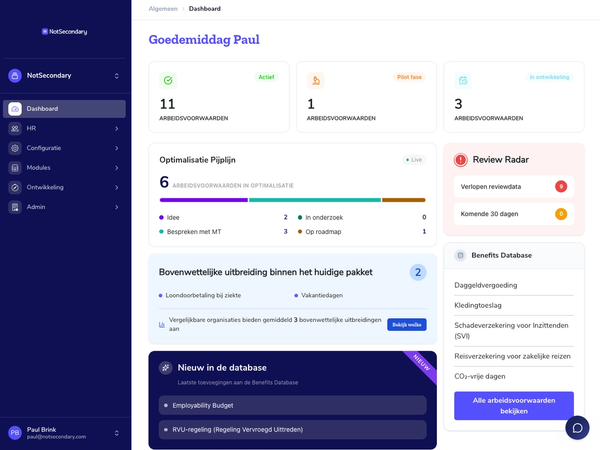
At Not Secondary, we work with this dynamic every day. OurBenefitsDatabasenow contains160+ fully developed benefits, each with22 data points. These cover legal, tax and financial implications, as well as the stakeholders you need to involve for each individual benefit.
This database forms the foundation ofTotal Benefits, our SaaS solution. A handy feature: you can add stakeholders directly in the software and actively involve them in the implementation of the benefits where they have a role to play. This builds buy-in, creates structure and keeps you in control of the timeline.